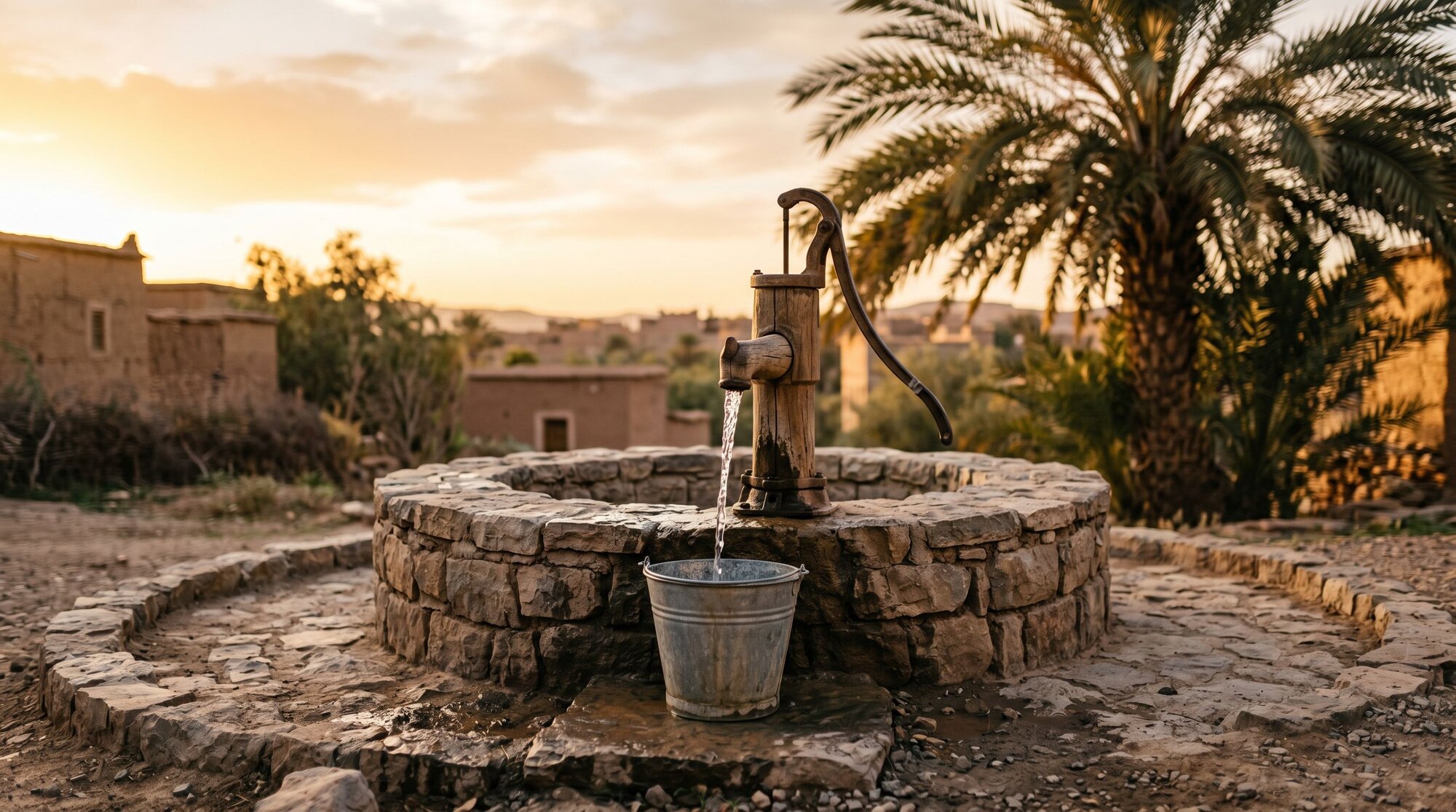
Yes, donating a water well through LaunchGood or others, is one of the clearest and most widely recognized forms of sadaqah jariyah (ongoing charity) in Islam. A single well can serve a community for 20 to 40 years, and every person who drinks, cooks, or washes from it earns the donor continuous reward (ajr), even after death. This is rooted in the well-known hadith of Prophet Muhammad (peace be upon him), recorded in Sahih Muslim 1631: when a person dies, their deeds end except for three — ongoing charity, beneficial knowledge, and a righteous child who prays for them.
What is sadaqah jariyah?
Sadaqah jariyah is the Arabic term for "ongoing" or "continuous" charity — giving whose benefit does not stop after the act of donation. Regular sadaqah, such as a distributed meal or paid medical bill, provides vital but one-time relief: once consumed, the act is complete.Sadaqah jariyah keeps producing benefit for months, years, or generations, and the donor continues to earn reward as long as people benefit.
Sahih Muslim 1631 names three things that keep rewarding a Muslim after death: sadaqah jariyah, beneficial knowledge (teaching, writing, publishing Islamic works), and a righteous descendant who supplicates for the deceased. A water well is one of the most accessible and measurable examples of the first category.
Why are water wells considered the best sadaqah jariyah?
Scholars across schools of thought repeatedly highlight wells as a premier example of sadaqah jariyah.Several factors explain this:
Water is a daily human need. People rely on water for drinking, cooking, cleaning, ablution (wudu), and hygiene — multiple times every single day. A well donor earns reward each time anyone uses that water, across every household in the village.
Long lifespan
Decades of benefit. Hand pump wells typically last 15 to 25 years, solar-powered wells 20 to 30 years, and deep boreholes 30 to 40 years. Each day of operation is another day of ongoing water for the donor.
Wide community impact:
A single hand pump serves 200 to 400 people.A solar-powered well serves 500 to 800.A deep borehole can supply 1,500 to 3,000 people.Multiplied across decades, the numbers become extraordinary: a solar well serving 500 people for 30 years represents a significant benefit.
Accessible entry point.
Where a hospital can cost $50,000+ and a school $100,000+, a hand pump well starts at just $200 to $500. That puts sadaqah jariyah within reach of any Muslim donor, not only the wealthy.
Scholarly support.HadeethEnc's commentary on Sahih Muslim 1631 describes sadaqah jariyah as charity whose reward is "enduring, permanent, and ceaseless, like endowment, building mosques, digging wells, etc."
Other examples of sadaqah jariyah
Water wells are not the only form of continuous charity. Classical and contemporary scholars list several:
1. Water wells — the most common and accessible.
2. Building or supporting a mosque.
3. Funding a school, madrasa, or orphanage.
4. Planting trees, especially fruit or shade trees.
5. Publishing beneficial Islamic knowledge (books, Qurans, translations).
6. Endowments (waqf) for ongoing community benefit.
Water wells stand out for several practical reasons: the cost barrier is much lower than a school or mosque; impact is immediate and measurable from day one; outcomes are verifiable through GPS coordinates and photos; and water is a universal need in every community.
How to donate to a water well as a sadaqah jariyah?
1. Choose a reputable platform with low or zero fees. [LaunchGood](https://www.launchgood.com) charges 0% platform fees, meaning 100% of your donation reaches the well project. The platform is funded by optional donor tips rather than by taking a cut of your charitable gift.
2. Select the well type and region. Choose a hand pump, solar-powered well, or deep borehole. Pick a specific country — Pakistan, Bangladesh, Somalia, Yemen, and more — or select "where most needed" to let vetted partners direct funds to the most urgent need.
3. Dedicate the well. You can dedicate the project in your own name, in honor of a parent, grandparent, or child who has passed, or as a family project combining multiple donors.
4. Receive a completion report. Most projects deliver within 4 to 12 weeks. You will receive GPS coordinates, photographs of the completed well, and — where available — community testimonials.Donating a water well in someone's name
Step-by-step process:
1. Choose your well type and location
2. Select "Dedicate this well" option
3. Enter the name of your loved one (parent, grandparent, child)
4. Add optional personal message
5. Receive completion certificate with their name
Frequently asked question
Does the reward stop if the well breaks?No. Scholars say the donor continues receiving reward for as long as the well functioned and the intention was sincere. You are not responsible for natural wear and tear. If the well served a village for 15 or 20 years before needing repair, that is 15 or 20 years of accumulated ongoing reward. Partners typically provide maintenance to extend the working life.
Can I donate a water well on behalf of a deceased parent?
Yes — this is common and strongly encouraged. The ongoing reward reaches both the deceased and you, the donor facilitating the charity.Darul Iftaa Birmingham confirmed this in a Hanafi fatwa, calling the building of a well the best form of Isale Thawab for a late family member.
Is donating a water well better than giving money directly to the poor? Both are valid and rewarded. Cash charity addresses urgent needs — food, medicine, emergencies. A water well provides ongoing benefit for decades and qualifies as sadaqah jariyah. Many Muslims do both: sadaqah to relieve immediate hardship and wells for multi-generational impact.
Do I need to be present when the well is drilled?
No. Partner organizations handle site assessment, drilling, installation, water testing, and community training on your behalf. You receive a completion report with photos and GPS coordinates once operational.
If I donate a water well, does the reward continue after I die?
Yes. According to Sahih Muslim 1631, sadaqah jariyah is one of only three things that continue to benefit a Muslim after death. Every person who drinks from the well — whether next year or 20 years from now — earns you ongoing reward (ajr), even after you've passed away.
What if the well breaks?
Scholars say you continue receiving a reward for as long as the well functions and your intention was sincere.
Who can you dedicate a well to?
- Deceased parents or grandparents (most common)
- Deceased child
- Living family members
- Multiple people (family group dedication)
Passionate about all things marketing.