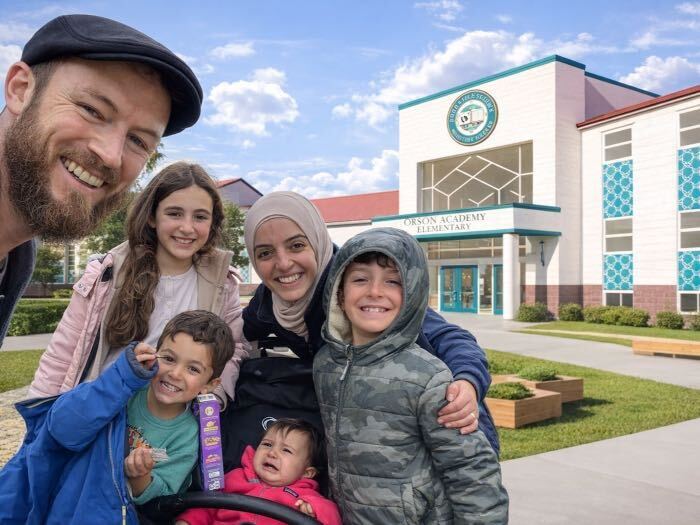
A few weeks ago, I pledged $11,000 to my kids' Islamic school for their incredible expansion project, "Crescent 2030." There was one small problem: I didn't actually have the money.
So I decided to do what I've helped hundreds of thousands of campaigns do — I crowdfunded it. But this time, I did it publicly, sharing every step of the process in real time on X/Twitter so others could learn along the way.
We hit our goal in 5 days. Alhamdulillah.
Here's everything I did — and everything you can steal for your own LaunchGood campaign.
My main predictor of success for a fundraiser isn't experience. It's the passion of the people leading it.— Chris AR Blauvelt, Founder & CEO of LaunchGood
A quick note before we dive in: I've been doing this for 13 years. LaunchGood has helped over 200,000 campaigns raise nearly $1 billion. I know a thing or two. But I'll tell you upfront — experience is secondary. The single biggest driver of whether a campaign succeeds is how much the organizer cares. If you're running a campaign right now, that passion is your superpower.
Step 1: Build an emotional campaign page
Logic fills out forms. Emotion fills out donation fields.
The first thing I did was set up the campaign itself. This sounds obvious, but the way you build it matters enormously. Here's what actually moves people:
Tip 1
Lead with emotion, not information. Facts tell, stories sell. Your page should make someone feel something before it explains anything. People give because their heart moves — the mind just rationalizes it after.
Tip 2
Use real pictures with real faces. For my campaign, I used a family photo. It sounds simple, but a genuine image of the people behind the cause creates an immediate human connection. Stock photos don't do this — your face does.
Tip 3
Tell your story — and use AI to help. You don't need to be a great writer. Tools like Claude or ChatGPT can help you turn bullet points into compelling narrative. Start with your "why," and let AI polish the rest.
Tip 4 — The Big One
Set meaningful giving levels and tie them to impact. This is perhaps the most underrated tip in crowdfunding. Without giving levels, someone might give $20. With the right levels, that same person gives $357. For my campaign, I set 1 square foot of the new school building = $357. It's a clear, tangible impact. The amount feels high but doable — and people know exactly what they're getting for their generosity.
I had set up the campaign a full week before I started promoting it — and received exactly $0 from 0 donors. That's the lesson right there: a great campaign page does nothing if you don't ask.
Step 2: Donate yourself first
Walk the talk. Always.
Before reaching out to a single person, I made my own donation. This isn't just good optics — it's spiritually and psychologically important.
If you haven't given to your own campaign, why would anyone else? Your first donation signals belief. It shows skin in the game. It also unlocks something in you — you stop feeling like you're asking for a favor and start feeling like you're leading a movement.
There's a beautiful story about Imam Malik — he wouldn't ask anyone to do something until he had done it himself. That principle applies here too.
There is a real spiritual dimension to this for Muslim fundraisers. The Qur'an reminds us that people will wish they had given more in charity before they die. When you reach out to someone with a donation opportunity, you're not burdening them — you're offering them a gift. Hold that truth in your chest when you make that ask.
Step 3: Choose the right strategy for your situation
One size does not fit all. Honest self-assessment here will save you a lot of time.
Not every campaign needs the same approach. Here's how to think about your strategy based on your situation:
- Mega-influencer with a large following? Post constantly and let reach do the work. Volume and visibility are your levers.
- Running a large campaign? Recruit volunteers, set up mini-fundraisers through unique tracking links, or create a leaderboard to drive friendly competition. (Check out how CelebrateMercy uses this to raise $100k+ every time.)
- Running a smaller, personal campaign like mine? Skip the broadcast approach entirely. Build an outreach list and go direct and personal. This is where most people underperform — and where the biggest wins are hiding.
For my campaign, I was in that third category. My $11,000 goal wasn't going to be hit by a viral tweet. It was going to be hit by direct, intentional conversations with real people who knew and trusted me.
Step 4: Execute your outreach intentionally
This is where campaigns actually win or lose. The campaign page is the stage — outreach is the performance.
Here's exactly how I structured my outreach plan:
1. Start with your past donors
I began by contacting people who had supported my fundraising efforts in previous years. Consistency is a deeply human value — if someone gave before, they're already bought in to you and what you care about. They're your warmest leads. Start there.
2. Contact relatives and close friends — and be specific
Not "hey, check out my campaign." Instead: "Can you sponsor 1 square foot of the school? It's $357." Specific asks are dramatically more effective than open-ended ones. Give someone a clear, concrete action and they'll surprise you.
3. Use anchoring psychology
Here's a technique that really works: set a high personal anchor first. I would message people saying, "I'm personally sponsoring 3 square feet — can you do just 1?" By anchoring to 3, the ask for 1 feels more accessible. I wasn't manipulating anyone — I was helping them calibrate what a meaningful contribution looks like.
4. Scale your ask to the person
Not everyone should receive the same request. If you have a wealthy contact — a friend, uncle, business partner — don't ask them for $357. Ask them for $1,000, $5,000, or $10,000. Whatever you genuinely believe they can comfortably give. Most people never ask big because they're afraid of the "no." But a respectful, specific big ask often gets a yes.
5. Track everything in a shared sheet
My wife and I sat down together and listed every person we planned to reach out to — then tracked it in a Google Sheet. We made it a friendly competition between us. Fundraising doesn't have to be solitary. Making it a team effort keeps you accountable and energized.
6. Get the kids involved
I gave my children a real assignment: design a flyer on Canva and walk door-to-door in our neighborhood asking people to donate. They also brought flyers to the iftar we were attending that evening. This did two things — it generated actual donations, and it gave my kids a lived experience of community generosity. Don't underestimate the power of your kids as fundraisers. People rarely say no to a child asking for something meaningful.
Step 5: Master your mindset
This one separates good fundraisers from great ones.
The biggest internal shift I had to make — and one I'd encourage every fundraiser to make — is this: I am doing my donors a favor, not the other way around.
The Qur'an is clear that on the Day of Judgment, people will wish they had given more in charity. When you reach out with a fundraising ask, you are offering someone a real opportunity — to earn reward, to do good, to be part of something meaningful. That's not a burden. That's a blessing you're extending.
"And spend from what We have provided for you before death comes to one of you..."— Qur'an, Surah Al-Munafiqun 63:10
When you carry this mindset, the way you ask changes. You're not apologetic. You're not sheepish. You reach out with warmth and conviction — and people feel that energy.
The Results: Day by day
Campaign progress
Day 1
$1,071
1 donor (myself). Launched outreach. 9% of goal.
Day 2
$5,800
22 donors. Personal outreach kicks in. Over 50%.
Day 3
$6,900
27 donors. Thanked existing donors. Personal digital outreach.
Day 4/5
$11,194
42 donors. 🎉 Goal reached at 102%. Alhamdulillah.
One extra note from Day 3: I made it a point to personally thank every donor who had already given. The Prophet ﷺ said, "He who does not thank the people has not thanked Allah." Gratitude isn't just manners — it deepens the relationship and often inspires donors to share your campaign with others.
Your quick-start checklist
- Build your campaign page with real photos, an emotional story, and clear giving levels
- Make your own donation first — before you ask anyone else
- Identify your campaign type and choose the matching strategy
- List every person you'll reach out to in a spreadsheet
- Make specific, personalized asks — not generic announcements
- Use anchoring: share what you're giving to frame what you're asking
- Calibrate your ask to each person's capacity
- Thank donors personally and promptly
- Get family involved — make it a team effort
- Carry the mindset: you're offering a blessing, not asking for one
Ready to launch your campaign?
LaunchGood has helped 200,000+ campaigns raise nearly $1 billion for causes around the world. Start yours today.
Start Your Campaign →
Chris Blauvelt is the CEO & founder of LaunchGood.com, a passionate Muslim American entrepreneur committed to building up the global Muslim community to reach its full potential.